
Veteran-Led · Battle-Tested · Personally Proven
I've Been Where
You Are
combat veteran · gold star brother · certified Life Coach
Warrior Life Coach — Tools for the Road Home
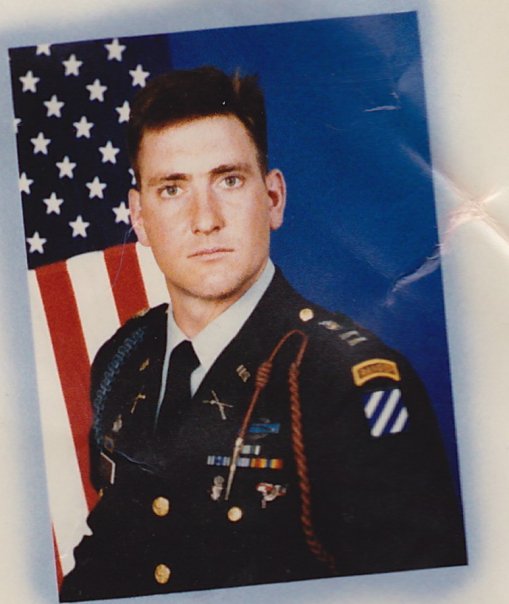
In My Own Words
The Mission Doesn't End
When You Come Home
I'm not a therapist. I'm not a program. I'm a veteran who went through the fire —Paratrooper duty, ground combat, three traumatic brain injuries, addiction, alcoholism, divorce and the long, disorienting process of trying to rebuild a life after service. After years of personal sacrifice I came out the other side with something to offer.
I will be in Recovery for the rest of my life. I say that plainly because I know there are warriors reading this right now who are in that same place and don't know if there's a way out. There is. I found sobriety through the same resources I now pass along to others — and that experience is at the core of everything I do here.
Warrior Life Coach is the resource I wish I'd had. It's built for veterans, first responders, and the families who love them — people who've given everything and deserve real support on the road back.
The Full Story
The Road Home
Airborne Ranger
I was commissioned Regular Army in 1982 as the George C. Marshall Award Winner and Distinguished Military Graduate from The University of Mississippi. Having completed Jump School in my Junior Year in ROTC, I dove into Basic Officer Training, Ranger School, Pathfinder School and headed to my first duty assignment: Ft. Bragg, NC. Home of the 82d Airborne Division!

Downrange
Within 10 months of arriving at Ft. Bragg, I had established myself as a dedicated Infantryman, where I focused on preparing my Rifle Platoon for rapid deployment. Having just returned from an exchange with Canadian Forces at their Jump School, we got the call October 25, 1983. Two days later I was on the island of Grenada. Plato tells us that "only the dead have seen the end of war." Dead bodies, firefights, unexploded ordnance, and the atrocities committed by enemy forces on the civilian population were horrific. I never processed any of those images — especially the children that ran into the line of fire.

3× Traumatic Brain Injuries
Three TBIs. The first in high school — a sophomore starting linebacker taking a hit that should have ended my season. The second in college — a "double-header" football game, Ole Miss vs. Alabama in Tuscaloosa. The third and most severe in the Mojave Desert, serving as an Observer/Controller at the National Training Center. I drove my Humvee into a tank fighting position at night. The Emergency Room notes clearly state: "head hit the rollbar." What did the VA say when I filed for TBI? "You're fine." I was lucky enough to serve in the military at a time when festering combat trauma and brain injury went unaddressed — because yelling and screaming at people is encouraged. Then came all the temptation.

The Hardest Battle
I resigned my commission in 1992. My last duty station was Ft. Benning, GA, where I served as a Small Group Tactics Instructor teaching tactics to future Company Commanders. I saw the political winds shifting and took advantage of a strong economy. I immediately landed a job as a sales representative at a small pharmaceutical company that rewarded high achievers with lucrative bonuses and beautiful people. Most of my colleagues complained about the color of their company-issued car. I was just thankful I got to sleep inside. I hated their whiny softness and became determined to dominate them all — and I did. I out-sold them, I out-drank them, and I was not a faithful husband. I was a runaway train on a dead-end track with a rock-and-roll band in the caboose. I would leave that industry having learned a great deal about disease states — but having also developed a high tolerance for booze, pills, and going fast.

Rock Bottom & the Road Up
In July of 2004, I was preparing to meet with a physician when I wandered into a hospital medical library. I was closing up the July issue of The New England Journal of Medicine when it flopped back open to a page with a subscription card inserted. Something familiar caught my eye — an article entitled "Combat Duty in Iraq and Afghanistan, Mental Health Problems, and Barriers to Care." What I saw in that article was a massive problem about to overwhelm our veteran healthcare system. Like moving to the sounds of the guns, I wanted to be involved. I also began to understand that the industry funding my lucrative lifestyle wasn't just unhelpful — it was a major part of the problem. Guilt and remorse began to dominate my thinking. Then, at the height of all of it, my little brother came home from Iraq. In less than three months, he was dead — from exposure to something he encountered downrange. His death hit me harder than all the evil I had ever encountered. It took me to the edge. I found myself alone, drunk, with a gun in my mouth — ready to end it all.

Finding the Road Back
I'll never forget the taste of gun oil. To this day, even when using it, the smell reminds me of lessons learned. What stopped me from pulling the trigger that night was a notebook I had shared with my little brother Richard on his deathbed. I was explaining the impact that NEJM article had on me — I could see the needs already outweighing the resources. Richard had his Master's in Hospital Administration and agreed that the old ways of treating wounds from war were going to require a multimodal approach. We both agreed it would demand a sophisticated level of coordination and collaboration — but that the most important element would be leadership and a deep knowledge of the warrior mindset, due to its reluctance to seek help. I remember him saying: "They won't trust the people taking them out of the fight — only the ones that have been in it."

Warrior Life Coach
Richard's death marked my conviction in walking away from a six-figure job and fancy expense accounts. It forced me to re-examine everything I was doing wrong and go back to the basics if I was to truly honor my little brother's challenge. If I had it to do all over again, I would have started with the substances and alcohol — they almost cost me my best life ever. Did you know you can't drink at 65 like you did at 25? It all comes down to leading by example. If you're talking the talk, you better be walking the walk. I became a student of brain injury. I found a peer-delivered discipline that generated a 47% reduction in suicidal ideation among the first 20 combat veterans I worked with. I've found the manifestation of Richard's prophecy — coordinated care and collaboration. These things exist. I became so overwhelmed with the service men and women I was helping in the community that I had to hire help. The resources and products we associate ourselves with are the real deal. We can not only connect you to them, but introduce you to other clients who will endorse them firsthand. You just have to reach out.

The Philosophy
What I Believe
Recovery isn't a destination — it's a practice. Every day that you choose to show up for yourself - is a mission accomplished. The goal isn't to go back to who you were before. It's to build something stronger from what you've been through.
I believe in the power of the body — movement, breath, and physical work as pathways back to yourself. I believe in the land — that growing things and building things reconnects us to processes. And I believe in community — that no one heals alone.
Most of all, I believe you already have what it takes. You just need to inventory "your rucksack" with someone who knows which tools work the best.

"The road home is real.
You don't walk it alone."
Ready to Start?
Your Road Home
Starts Here
Explore the resources, tools, and community built specifically for veterans, first responders, and their families. The road home is real — and you don't have to walk it alone.
Veteran-Led · Battle-Tested · Personally Proven

The first step is yours
Ready to Start Your Journey?
Before any mission, a Ranger does his recon. Read the first field note and do yours — because if you can't help yourself first, no one else can do it for you.
Start Your Journey